
Beckett Learns to Lead
Happiness for BeginnersBeckett’s bluster gradually gives way to moments of responsiveness, as he leads a dangerous course, learns from the group, and recognizes Helen’s ability.
increasing Bearing strength in each event
 decreasing
Bearing strength in each eventdecreasingThe Teenage Instructor

The Teenage Instructor
Authority questioned
Helen expects a weathered adult to lead the expedition but finds Beckett, a young and stringy instructor with a theatrical manner. His age and jokes make her doubt his judgment.
Beckett asserts that he is the group’s link to survival and lays out demanding expectations. His confidence is forceful, but his ability to handle the group remains unproven.
A leader in formation
The contrast between his self-presentation and apparent youth creates uncertainty. Beckett must establish authority through decisions, not merely through dramatic warnings.
The Relentless Instructor

The Relentless Instructor
Public lessons
Beckett repeatedly calls attention to Helen’s errors and makes her a cautionary example. Although his advice often concerns real hazards, his delivery leaves Helen feeling humiliated and unsupported.
He also enforces the course’s rules about blisters, hygiene, water, and respect for the environment. The group’s safety depends on these instructions, even when his style makes it harder for participants to receive them well.
Authority with consequences
Beckett’s harshness produces both practical learning and resentment. His leadership remains complicated because correctness does not automatically make his methods considerate.
Trust After the Accident
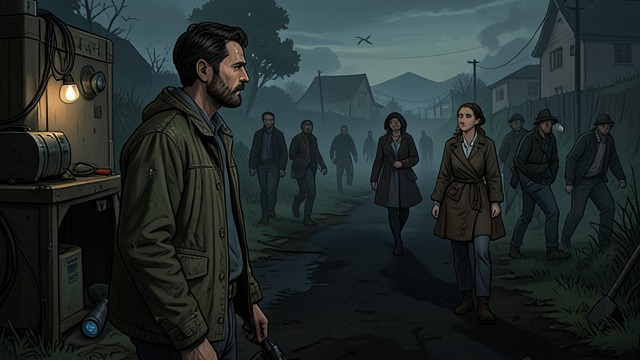
Trust After the Accident
An overdue response
When Helen reaches camp with news of Hugh’s injury, Beckett begins planning the evacuation. He acknowledges the seriousness of the situation but decides they must wait until morning because the injured group is off the trail and it is dark.
The decision disappoints Helen, who knows where Hugh is, but Beckett judges that a night search could create additional danger. At dawn, he organizes an early departure and assigns Helen to lead.
Judgment under uncertainty
Beckett’s choices are imperfect but not careless. The episode reveals a leader balancing urgency with the risks of sending people into darkness.
Burning the List
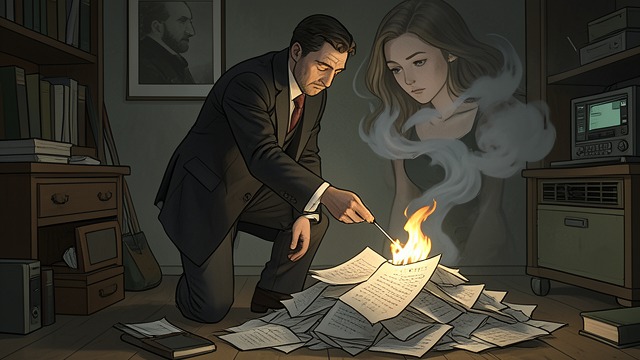
Burning the List
A rule enforced dramatically
Beckett finds Helen’s goal list on the ground and treats it as litter. He reads from it before burning it, unaware that the writing expresses Helen’s deepest ambitions for the trip.
His action reinforces the course’s Leave No Trace rule but wounds Helen by turning a private hope into a public spectacle. Jake later offers a poem as a substitute object of comfort.
Principle and person
Beckett’s devotion to environmental protection can be sincere while his handling of Helen remains insensitive. The episode makes the cost of his theatrical authority visible.
Choosing Helen as a Solo Partner
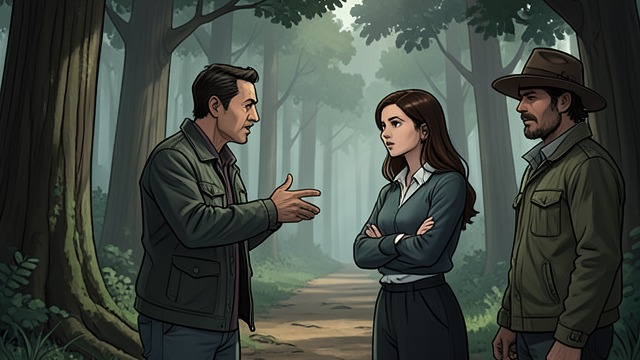
Choosing Helen as a Solo Partner
A deliberate assignment
Beckett assigns Helen to a Solo group with Jake despite her request to avoid him. When Helen challenges him, he explains that she is the strongest map reader and that Jake can provide medical help.
He also says that Jake believes in Helen when she does not believe in herself. The explanation shows that Beckett has paid closer attention to her than his frequent criticism suggested.
Recognition without praise
Beckett’s respect remains blunt and imperfectly expressed. Still, he makes an important choice: he trusts Helen’s abilities enough to give her a challenging role.
Orientation afternoon
During the first week in the mountains
The evening Hugh is injured
The morning of the unguided hike
The night before the Solos
